Category: Technology
-

2024 Energy Industry Trend Predictions from the UDC Team
UDC thought leaders share their 2024 industry trend predictions and insights.
-

Taking Digital Utilities to the Next Level with an EDRM Portfolio
Realize greater digital utility ROIs around employee productivity, asset, and grid performance optimization by adopting an EDRM portfolio.
-
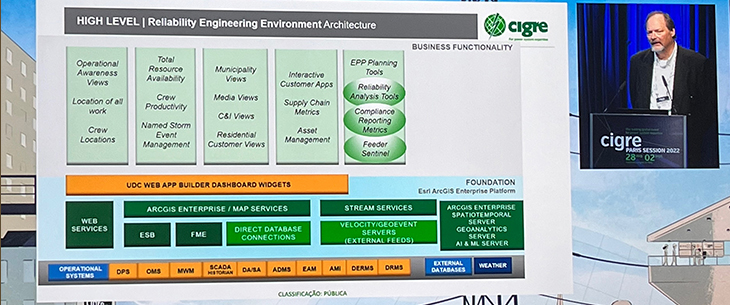
Effective DER Management Requires a Holistic Approach to Reliability Analysis Underpinned by GIS and BI Tools
GIS and BI tools enable an enterprise approach to grid reliability and asset management, which is key to helping utilities enable DERs on the grid.
-

“Serverless” Web Adaptors: Exploring ArcGIS Enterprise in the Cloud
Learn how going "serverless" can set your organization up for a more secure future in the cloud.
-

Creating Load Profiles for Enhanced ADMS Operations
Learn which load profile generation approach for the ADMS model is best suited to your utility.
-

ADMS’s Need for Zero Data Latency
Utilities should strive for zero data latency to reach the full benefits from a model-driven ADMS.
-

Supporting DIMP with ArcGIS: Part Two of Two
Leverage Esri's data exploration tools in ArcGIS Insights for enhanced gas leak analyses and an enriched DIMP.
-

Data Project Transparency and Improvement with Power BI
Learn how your utility can harness Power BI to ensure continuous improvements across your data projects and business.
-

GIS Data Governance for Improved ADMS Results
Providing quality data, including from the GIS, is essential to support each ADMS application and integration and in many cases is required.
-

UVM Bid Process Overhaul and the Digital Utility
A key missing component in veg management is bid process automation. Learn how to achieve end-to-end digital transformation by starting with the bid process.